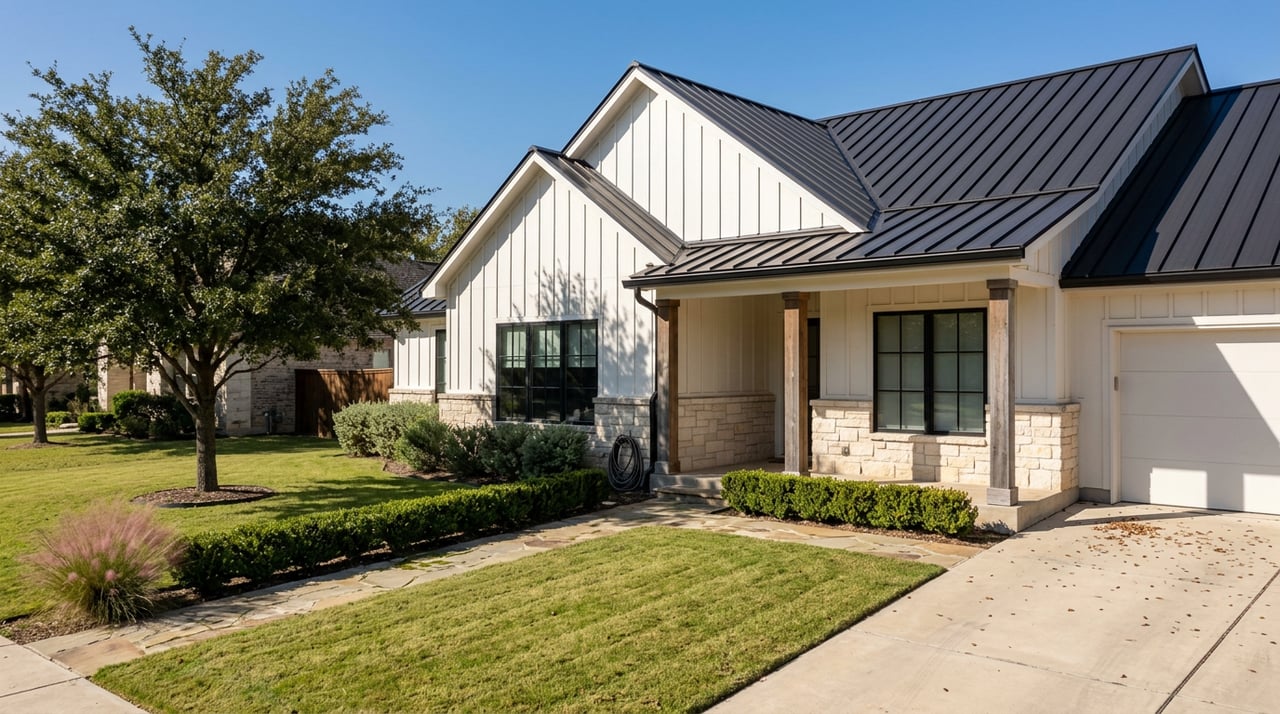
Two buyers can tour Aledo ISD homes on the same Saturday, at similar price points, and walk away with two very different ongoing monthly obligations. Not because of the home price. Not because of the school zoning, which is identical. Because of an infrastructure assessment.
One buyer is touring Walsh, the 7,200-acre master-planned community that straddles the Tarrant and Parker county line just west of Fort Worth. The other is touring Parks of Aledo, tucked closer to downtown Aledo off FM 1187. Both communities are zoned to Aledo ISD. Both sell new construction from national and regional builders. Both show up in the same search when someone types "Aledo ISD new homes" into a browser. According to Walsh's own facts page, Walsh bills its residents through a PID assessment, with the rate doubling in 2026 for homes in newer planning areas, while Parks of Aledo doesn't use that mechanism at all.
The Same District, Two Different Cost Structures
Parks of Aledo keeps its carrying costs simple. According to the community's own published facts page, homes there carry a property tax rate of roughly 2.19 percent, described specifically as lower than two nearby Aledo ISD communities, Morningstar and Walsh. HOA dues run $600 a year, close to $50 a month, covering ground maintenance and access to amenities like a mountain bike trail, a disc golf course, a dog park, and a community garden. Builders active there, including Bloomfield Homes and Our Country Homes, list that flat annual number without much fine print.
Walsh works differently, and the difference has nothing to do with the quality of the homes. Walsh sits within Fort Worth's city limits, which means it carries city, county, and school taxes like any Fort Worth address. On top of that, Walsh is inside Fort Worth Public Improvement District No. 16, created by the city in September 2016 to fund the roads, drainage, and public infrastructure the development needed before homes could exist there at all. That PID assessment is billed separately, through the property tax process, and it's not the same thing as HOA dues.
Walsh's own HOA is a second, separate cost: dues currently range from $180 to $257 a month for single-family homes depending on lot size, covering front yard maintenance, 2 gigabit internet, membership to the Athletic Club, pools, trails, and the community's Makerspace. That's before the PID assessment even enters the picture.
Here's a side by side of what each community publishes:
| Walsh | Parks of Aledo | |
|---|---|---|
| School zoning | Aledo ISD | Aledo ISD |
| County | Tarrant and Parker | Parker |
| City limits | Fort Worth | Aledo area, unincorporated/City of Aledo |
| Property tax structure | City of Fort Worth rate plus PID assessment | Roughly 2.19 percent, no PID |
| HOA dues | $180 to $257 per month (single-family) | $600 per year (about $50 per month) |
| PID assessment | Yes, Fort Worth PID No. 16 | No |
Same district. Same general commute. Structurally different bills.
The Number That Just Doubled
Here's the detail that actually changes the math for anyone shopping Walsh specifically, not just Walsh versus its neighbors. Walsh's own facts page states that the PID assessment rate increased in 2026, moving from roughly $0.18 to roughly $0.36 per $100 of assessed value, expressed as a millage equivalent. That's a doubling. But it doesn't apply evenly across the entire community. Homes built in the original Planning Areas 1, 2, and 3 keep the lower legacy rate of about $0.18. Homes in the newer planning areas carry the higher rate.
That means two homes inside the same 7,200-acre development, built by the same handful of builders, a few streets apart, can carry permanently different assessment rates depending on which phase they sit in. A buyer comparing a resale in an early Walsh phase against new construction in a current phase isn't just comparing square footage and finish-out. They're comparing two different cost structures baked into the land itself.
Why the Split Exists
This isn't a punitive fee increase aimed at newer buyers. It's a mechanical result of how PIDs finance infrastructure. The City of Fort Worth's own annual service plan update for PID No. 16, covering fiscal year 2026, shows the assessment is tied to bonds issued against specific Improvement Areas, each one funding a defined phase of construction. The actual infrastructure costs in Improvement Area 1 came in around $27.5 million. Improvement Area 3 ran closer to $37.2 million. Improvement Area 4, still being built out, carries an original estimated cost near $62.5 million. The bonds backing those improvement areas carry an effective interest rate of 4.63 percent for fiscal year 2026.
Each phase of Walsh finances its own infrastructure through its own bond issuance, priced at the interest rate available when that phase broke ground. Earlier phases locked in their financing years ago, when both construction costs and interest rates were lower. Later phases are financing infrastructure at today's costs and today's rates, and that gets passed through as a higher annual assessment. It's less a rate hike and more a snapshot of when your particular patch of Walsh was financed.
What the Assessment Is Actually Building
It helps to see what that money is turning into on the ground right now, because the PID and the pace of construction inside Walsh are the same story. An H-E-B store is currently permitted for a site at FM 3325 and the I-20 service road inside Walsh Ranch, with construction that began in October 2025 and is expected to wrap by December 2026. The 127,754 square foot store carries an estimated construction cost near $18 million.
A few miles from that site, the University of Texas at Arlington is planning a new campus inside Walsh on 51 acres, part of what's been referred to locally as UTA West. And at the corner of I-30 and Walsh Ranch Parkway, Worthington Bank has announced plans for an eight-story headquarters tower, a scale of commercial investment that's unusual for a community this young.
None of that infrastructure, from the roads that connect those sites to the utilities underneath them, gets funded through the city's general tax base. It gets funded through the PID, phase by phase, which is exactly why the assessment tracks the pace of construction rather than staying flat.
What This Means If You're Comparing Aledo ISD Communities
If you're cross-shopping Aledo ISD neighborhoods right now, the sticker price and the HOA line on a listing sheet don't tell the whole story. A few things worth doing before you write an offer, whether you're looking at Walsh, Parks of Aledo, or Morningstar:
Ask which planning area a Walsh home sits in, not just which builder built it. Planning Areas 1 through 3 currently carry the lower legacy PID rate near $0.18. Anything built more recently is likely on the higher rate near $0.36.
Ask for the PID disclosure separately from the HOA disclosure. Section 5.014 of the Texas Property Code requires PID assessments to be disclosed before closing, and the two documents cover different obligations that both show up on your monthly housing cost.
Run the full carrying cost, not just the mortgage payment. A Walsh home's all-in monthly number includes city and county property tax, the PID assessment, and HOA dues that can run over $250 a month depending on lot size. A Parks of Aledo home skips the PID entirely and carries a flat $50 a month HOA. That gap can be the difference between two homes that looked similar on price.
If you're weighing an early Walsh phase against a current one, remember you're not just choosing a floor plan. You're choosing a financing vintage.
A Few Questions Worth Asking Before You Compare
Is a PID assessment the same as HOA dues? No. HOA dues fund community amenities and maintenance through the homeowners association. A PID assessment funds public infrastructure and is billed through the property tax process, collected by the city.
Can a Walsh PID assessment be paid off early? Some PID assessments allow prepayment of the remaining balance in a lump sum. Whether that option exists for a specific parcel, and what it would cost, is something to confirm through the title company or the seller's closing documents before assuming it's available.
Does every new Aledo ISD community use a PID? No. Parks of Aledo, for example, doesn't carry one, which is part of why its published tax rate runs lower than Walsh's. Whether a given community uses a PID depends on how its infrastructure was originally financed.
If you're comparing homes across Aledo ISD and want someone to walk through what a specific address in Walsh, Parks of Aledo, or anywhere nearby actually costs to carry each month, not just what it costs to buy, Carson Gates can pull the disclosures and run the real numbers with you. Let's connect.
This article is general information, not legal, tax or financial advice. Consult a qualified professional about your situation.